Grapevine Maintenance Tips for Napa Vineyards
Home – Expert Tips For Grapevine Maintenance
Grapevine Maintenance Tips for Napa Vineyards
Napa Valley is known around the world for its vineyards, and healthy grapevines are the foundation of that reputation. Whether you’re managing a small family vineyard or a larger commercial block, the way you maintain your vines directly impacts yield, grape quality, and the long-term health of your property. Proper grapevine maintenance also supports the wider landscape, ensuring your vineyard thrives in harmony with Napa’s unique environment.
At Affordable Arborists, our work goes beyond tree removal and land clearing—we also support vineyard owners with land and plant health care strategies. Here are some of the most important vineyard maintenance tips for Napa property owners looking to protect their investment and maximize harvest quality.
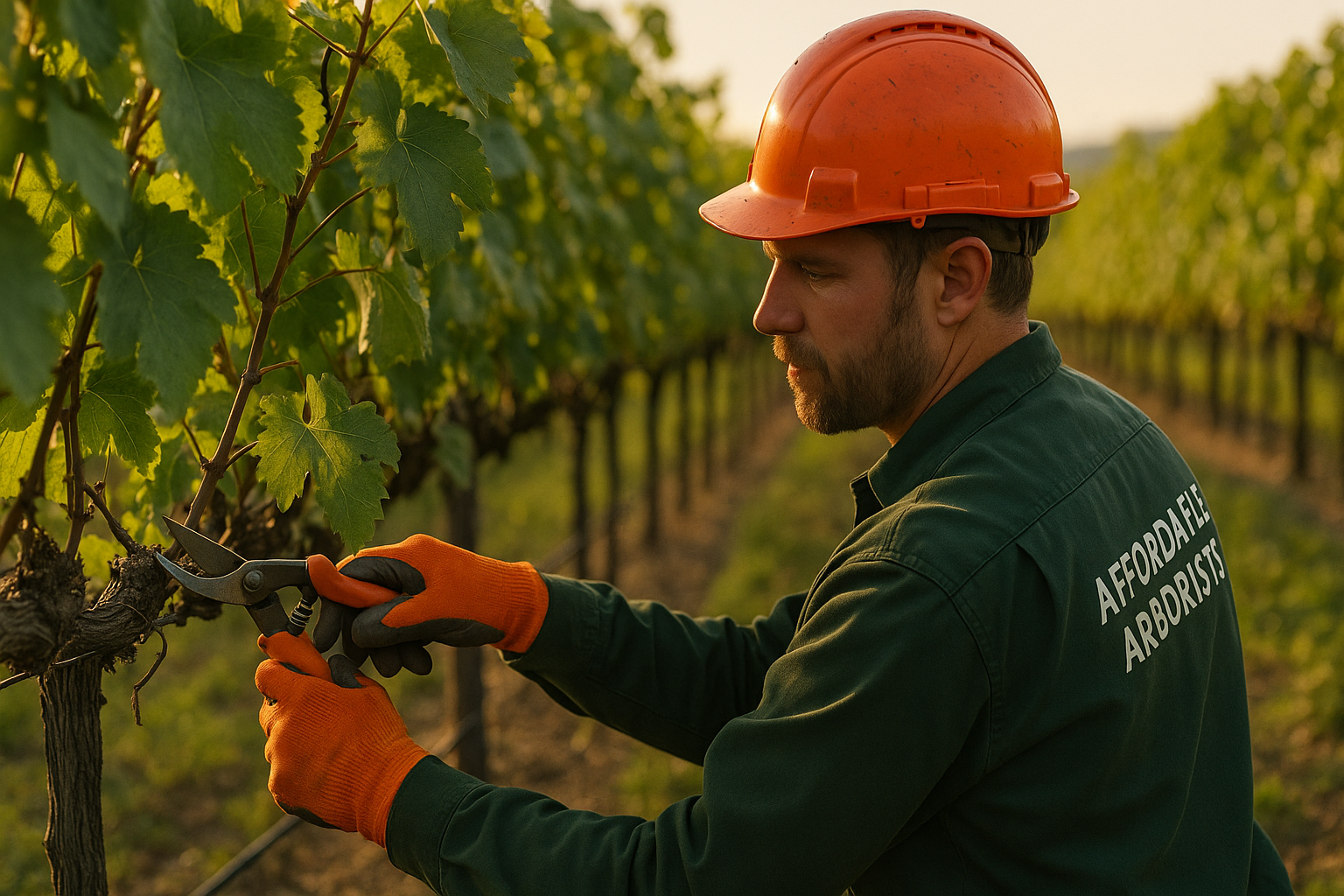
Pruning for Health and Productivity
Pruning is one of the most important vineyard tasks. Each winter, vines need to be cut back to promote new growth and maintain proper structure for the season ahead.
Timing: In Napa, pruning typically takes place between late December and February, when vines are dormant.
Methods: Spur pruning and cane pruning are the two most common approaches. Which one you use depends on the grape variety and your trellis system.
Benefits: Proper pruning encourages even canopy growth, increases sun exposure for fruit, and reduces the risk of disease.
Working with a certified arborist or vineyard specialist ensures that pruning is done correctly, giving your vines the best start to the growing season.
Managing Vineyard Canopies
The canopy of a grapevine—its leaves and shoots—plays a vital role in grape development. However, if not managed, the canopy can become overcrowded and shade the fruit.
Leaf Removal: Strategic removal of excess leaves improves airflow and sun exposure, reducing mildew risk and improving ripening.
Shoot Thinning: Removing weaker shoots ensures the vine’s energy goes into stronger, fruit-bearing ones.
Trellising: Training shoots along wires keeps vines organized and makes harvesting more efficient.
Healthy canopy management leads to higher-quality grapes, with better balance between sugar, acidity, and flavor.
Irrigation and Soil Care
Napa’s Mediterranean climate means hot, dry summers. While vines are drought-tolerant, young or stressed vines benefit from careful irrigation.
Drip Irrigation: The most efficient system for vineyards, providing targeted watering to the root zone.
Soil Monitoring: Regularly testing your soil ensures proper nutrient levels and helps prevent overwatering.
Cover Crops: Planting grasses or legumes between vineyard rows improves soil health, prevents erosion, and adds biodiversity.
Because Napa County enforces strict water use guidelines, maintaining efficient irrigation not only saves water but also keeps you in compliance with local regulations.
Disease and Pest Prevention
Grapevines in Napa are vulnerable to diseases like powdery mildew, botrytis, and black rot, as well as pests like leafhoppers and mealybugs. Preventative maintenance is key:
Regular Inspections: Walk your vineyard often to catch early signs of stress or infestation.
Airflow Management: Keeping canopies open reduces moisture and lowers the risk of fungal disease.
Integrated Pest Management (IPM): Combining natural predators, biological controls, and selective treatments minimizes chemical use while protecting vines.
Working with professionals helps ensure you’re using the most effective, environmentally responsible strategies to safeguard your vines.
Stump and Tree Management in Vineyards
Many Napa vineyards border oak woodlands or other tree stands. Over time, these trees may need pruning or removal to protect vines from shade, root competition, or storm damage.
Tree Removal: Dead or diseased trees near vineyards should be taken down safely to prevent falling branches.
Stump Grinding: Removing stumps eliminates pest habitats and makes way for new planting rows.
Arborist Oversight: Certified arborists can help balance tree preservation with vineyard productivity.
Seasonal Maintenance Checklist for Napa Vineyards
Every season brings different needs. A practical maintenance checklist helps you stay on track:
Winter: Pruning, trellis repair, soil testing.
Spring: Shoot thinning, pest monitoring, irrigation system checks.
Summer: Canopy management, leaf pulling, disease control.
Fall: Harvest prep, cover crop planting, post-harvest pruning of excess growth.
Consistent vineyard care keeps vines strong year after year, improving both yield and quality.
Final Thoughts
Strong, healthy grapevines are the heart of every vineyard, and proper maintenance makes all the difference. From pruning and canopy management to irrigation, soil care, and pest prevention, consistent upkeep protects your vines and improves your harvest.
Affordable Arborists is here to support Napa vineyard owners with both tree services and vineyard-focused land care. Whether you need help removing an old oak near your vines, grinding stumps for a new planting block, or setting up a seasonal vineyard maintenance plan, we’ve got the expertise to help.
Contact us today at (707) 898-5598 or request a free consultation online. Let’s keep your Napa vineyard thriving for years to come.
Brianna H. Buck
A leader in arboriculture and tree safety, Brianna H. Buck offers trusted guidance in residential, commercial & vineyard tree care.
Author | Partner
Hire Grapevine Maintenance Experts
Get expert vineyard care, seasonal pruning, and health checks from Napa’s trusted grapevine maintenance specialists today.
Latest Articles
No popular posts found